The History of Miriti
From Amazonian palm to Cultural Heritage of Pará — discover the journey of miriti and its artisans.
What is miriti?
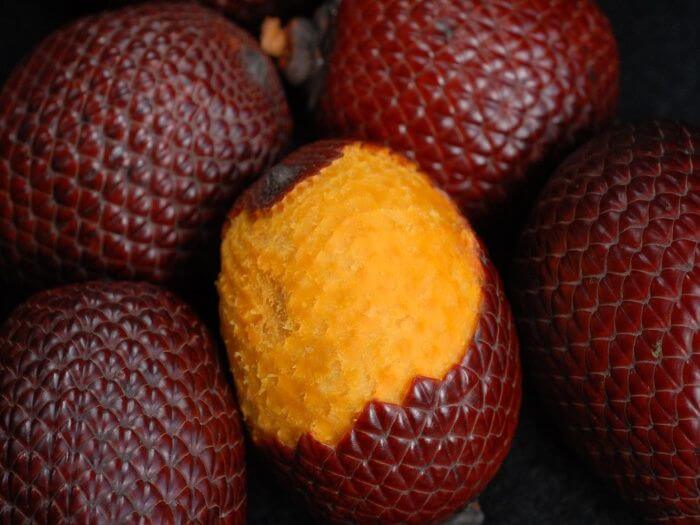
The biodiversity of the Amazon plays a crucial role not only in preserving the environment but also in developing sustainable economic alternatives that can boost several sectors. Among the many treasures of this vast tropical forest, miriti stands out as a notable example of a resource with great potential for regional bioeconomy. Native to the flooded areas of the Amazon and Cerrado, the miriti palm, known by various local names such as buriti, buri, carandaí-guaçu or muriti, is revered by some indigenous communities as the "tree of life". Its distribution spans from the North to some regions of Southeast Brazil. Besides its cultural importance, miriti offers a myriad of practical benefits. Its fruit is rich in vitamins A, B and C, and provides calcium, iron and essential proteins. Traditionally consumed fresh, buriti fruit is also widely used in regional cuisine in sweets, juices, ice pops, liqueurs, wines and desserts.
The oil extracted from the fruit is highly valued for its medicinal properties. Rich in carotenoids, it is used by traditional Cerrado communities as a vermifuge, wound healer and natural energy source. Its applications extend to cosmetics for softening and varnishing leathers, and as an ingredient in creams, shampoos, sunscreens and soaps.
Economically, miriti fiber plays a fundamental role, especially in the handicraft industry. Its resistant, naturally malleable fiber is widely used to make toys, decorative items and cosmetics. This practice not only values the region's natural resources but also preserves and promotes cultural traditions and local knowledge. In short, miriti is much more than a simple Amazon plant; it is a symbol of the wealth and diversity of this region.
Miriti toys
Miriti toys, an artistic expression of typical handicraft from Abaetetuba, are made from the pulp or sponge of miriti, a palm common in Amazon floodplain areas and abundant in the municipality. Abaetetuba is located in the Guajarina physiographic zone, on the banks of the Tocantins River, facing Marapatá Bay, in Lower Tocantins.
Founded in the 18th century, the city has flat topography, with soils ranging from floodplain, uplands and terra firme. The hot and humid climate, subject to periodic floods, favours the development of miriti groves. These toys, true works of art, reflect the desire to turn dreams and experiences into tangible matter. Artisan Antonio Silva reveals:
"I learned to make toys from my own head, watching others make them, I learned, but I never copied anyone."
The vague history of origins
The history of miriti toys has its origins lost in the time of Amazonian oral culture. In Abaetetuba, it is believed that children were the first to use miriti to create small toys. Later, these toys became part of the Círio de Nossa Senhora de Nazaré in Belém, which dates back to 1793. Today, miriti toys are so intertwined with the procession that they have become one of its most representative cultural symbols.
The Círio de Nazaré is the largest Catholic manifestation in Brazil, held annually on the second Sunday of October in Belém. It is a celebration that transcends religion, representing a cultural synthesis of the complexity and diversity of the Amazon region. The connection of miriti toys with the Círio reveals their cyclical nature. During the festival, they become not only items of entertainment but also objects of devotion and gratitude.
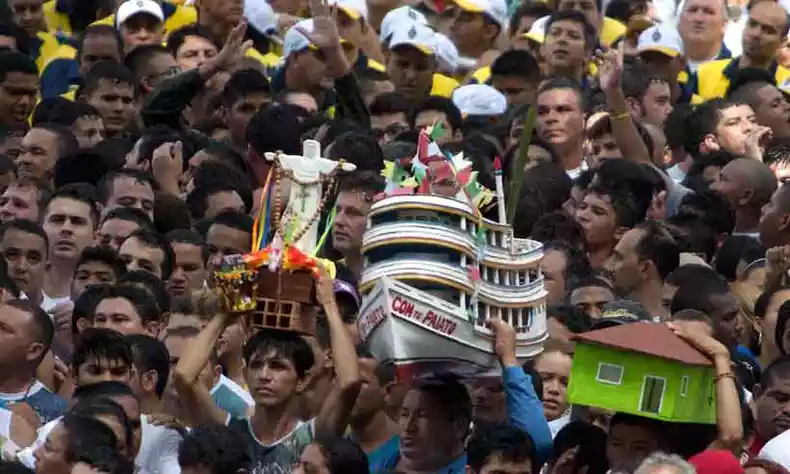
Thus, miriti toys are a notable example of how art and religion intertwine in Amazonian culture. They are not only objects of entertainment but expressions of devotion, tradition and identity, contributing to the preservation and appreciation of local culture.
"The forest gives so many good things, right? But one is special, the miriti palm. For me, the blessed tree has a very important meaning, you know? Because it saved my life. It offers the raw material that saved my life. And I came to love people more after I came to love the forest, you know?"
How are they made?
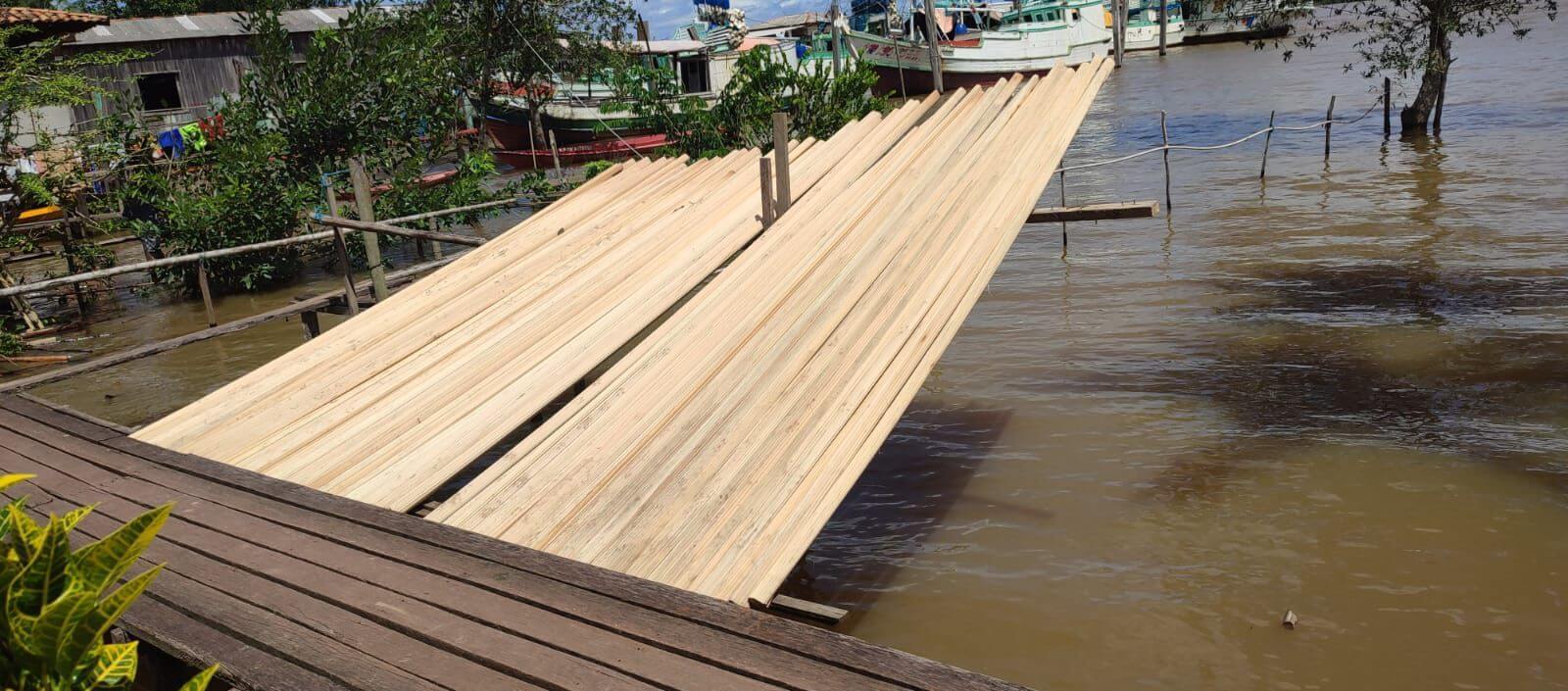
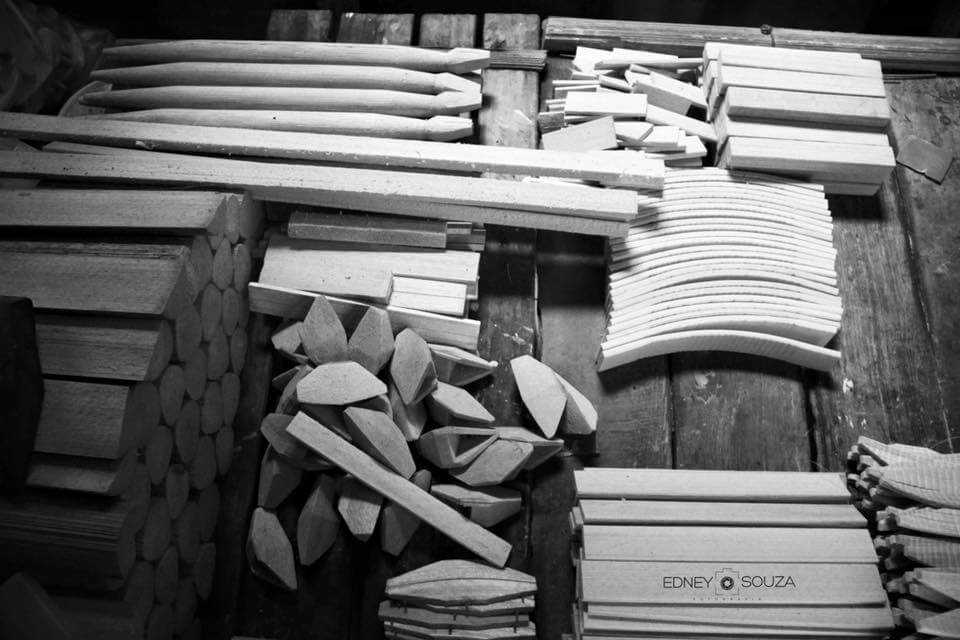
As already mentioned, the toys are carved from a material known as miriti fiber, a light and flexible vegetable substance. The miriti palm grows abundantly in the Abaetetuba region, reaching heights of 30 to 50 metres. The intense production of toys in Abaetetuba is driven by the large number of miriti palms in the municipality.
The dense fluvial network provided ideal conditions for the proliferation of this plant species. To prepare the fiber for carving, the hard fibres are removed and the pulp logs are left in the sun to dry. Artisans acquire the material between November and July of the following year to ensure it is fully dry.
The artistic process
The production of miriti toys reveals the deep connection between the artist and their creation. The artisan not only executes the work but shapes it with a unique aesthetic touch. The main technical processes include cutting, sanding, assembly and painting. The artisan penetrates the matter of miriti, giving form to their imagination and desires. In this way, the miriti toy artisan is like a sculptor of dreams.
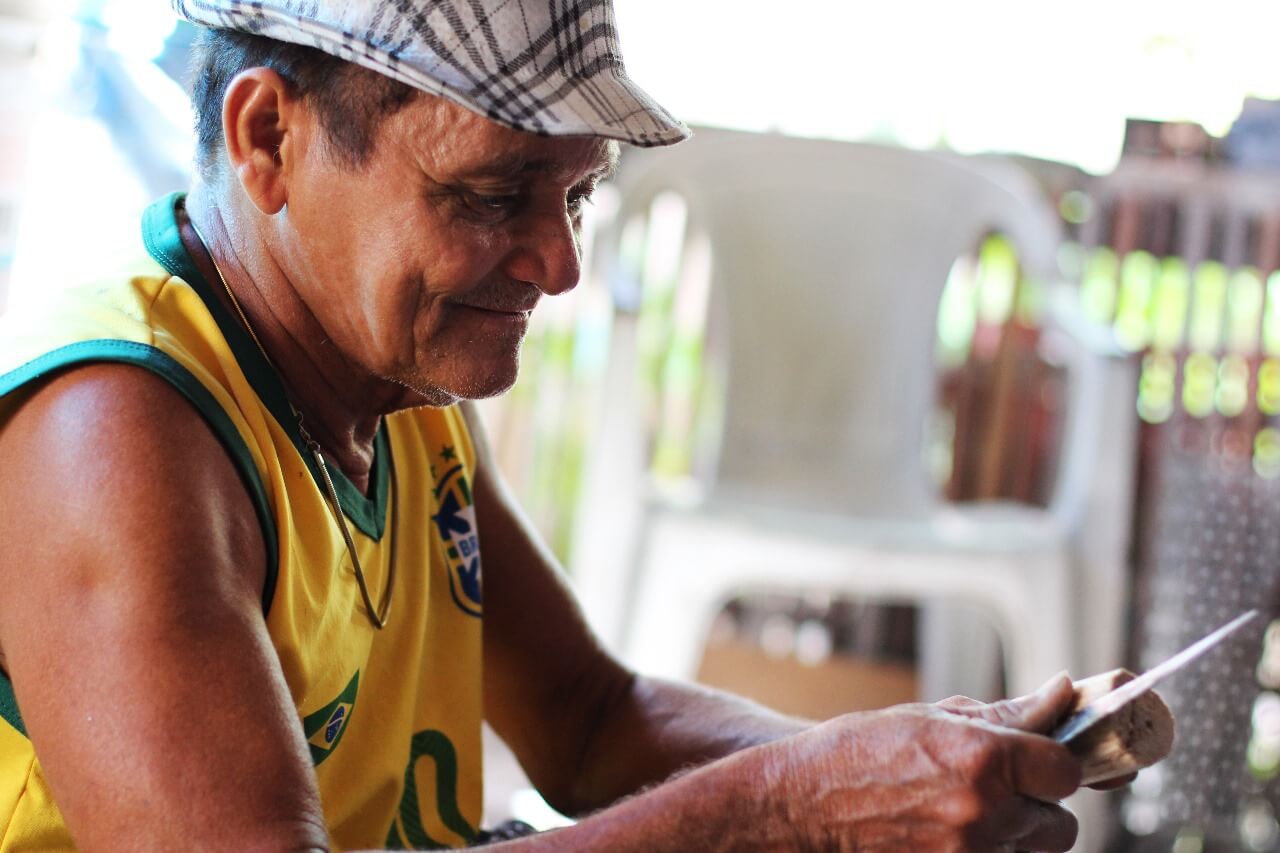
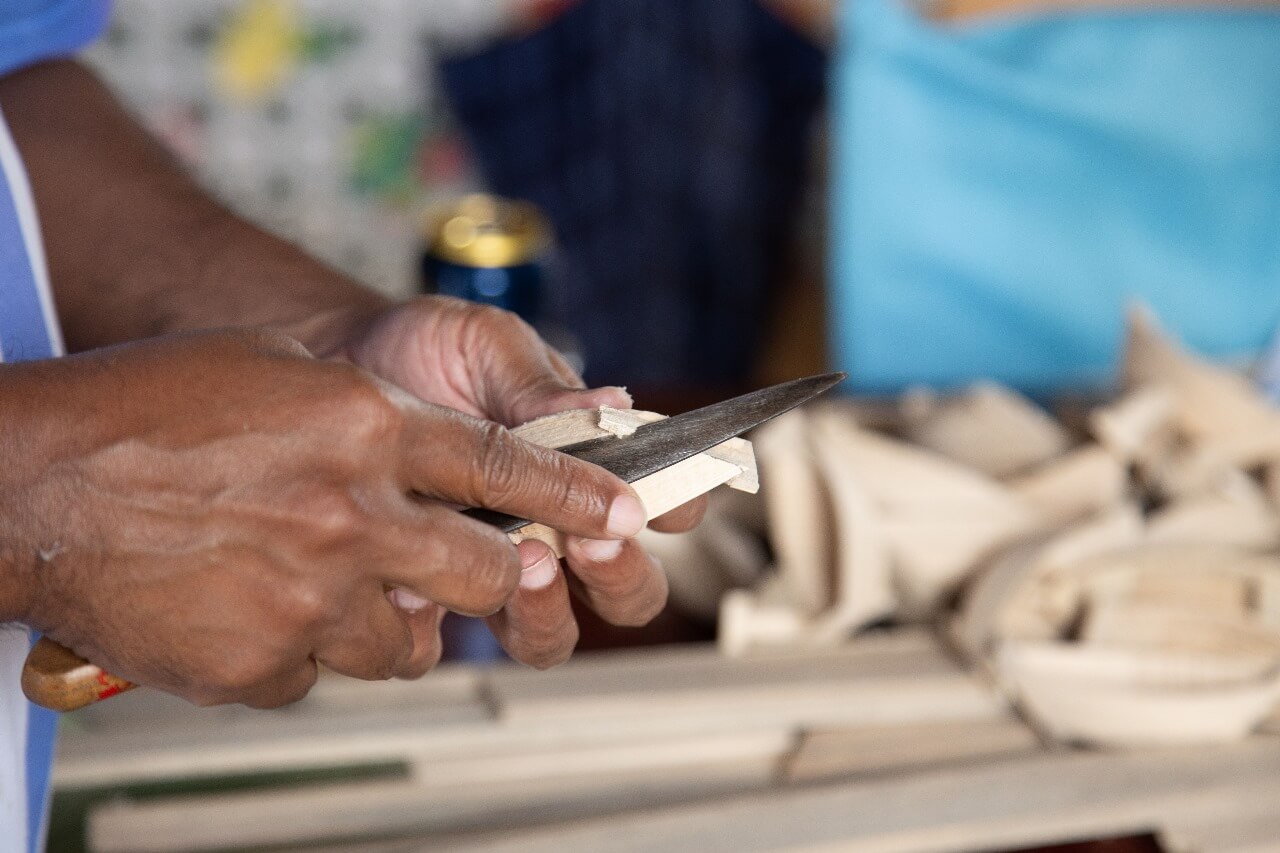
Sitting on the ground or on a small stool, the toy artisan establishes an intimate relationship with the materials. With their hands they carefully handle a piece of miriti, smoothing surfaces and contours. After carving, parts are assembled with glue or pins. Some artisans keep the natural colour, others paint with colours or symbols.
Types and characteristics of toys
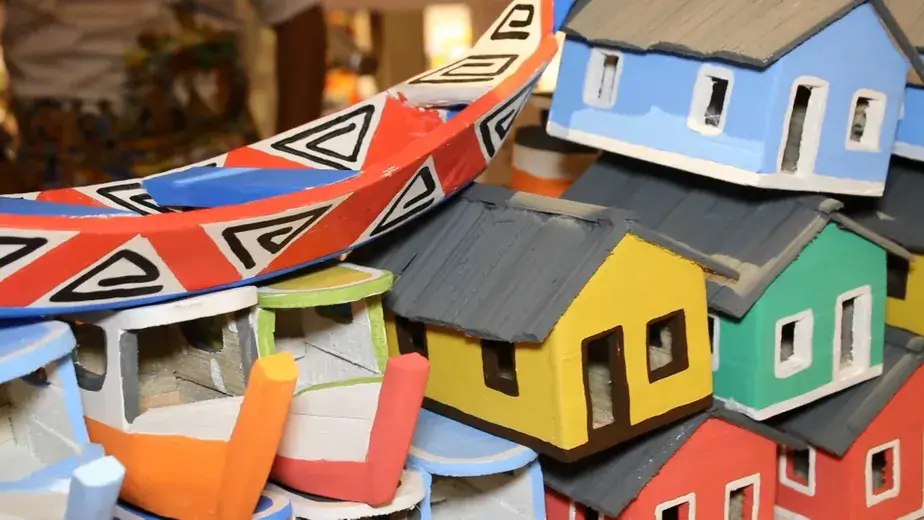
The diversity of objects produced is vast. Examples include the "montaria" (small canoe), sail canoes, ships, yachts, the "cobra-que-mexe" (moving snake), the "tatu", the "soca-soca", and many others that represent the inventiveness and rich imagination of the caboclo.
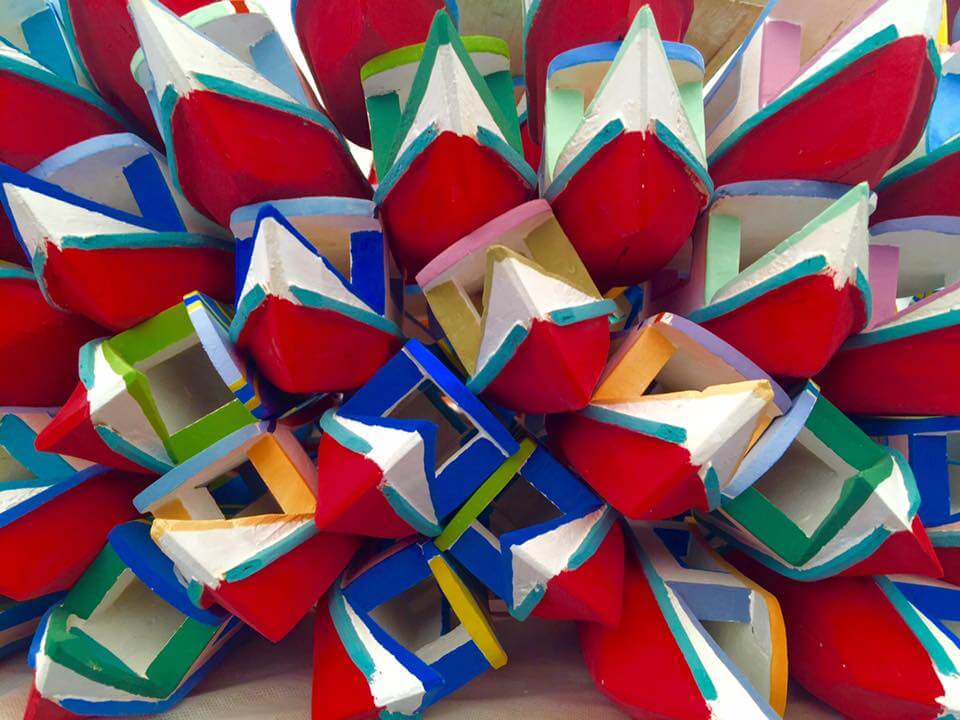
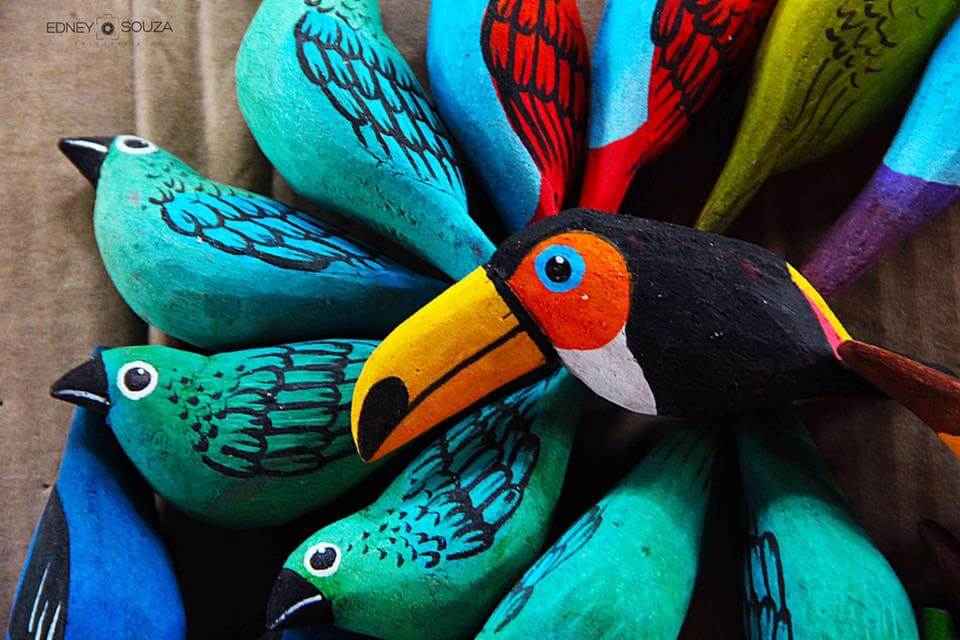
Following the same chromatic and plastic conception are the "pombinhas" (little doves) and the "dançarinos" (dancers), among other examples of the varied typology of miriti toys, representative of the inventiveness of the caboclo. Artisans complement with other materials as needed: cotton, clay, fabrics, pins, glue, resins, paints, etc.
Factory of dreams: a nucleus of social and cultural transformation
The "factory of dreams" is an artistic and community space located in the Cristo Redentor neighbourhood in Abaetetuba. It is linked to MIRITONG (Miriti Art Association) and is part of the efforts of master artisan Valdeli Costa and his family. The project started in 2002, offering workshops in theatre, dance, music and handicraft, and created the MIRITINS theatre group, composed exclusively of children.
It is currently coordinated by Gizele Alves and art educators José Antônio and Augusto Neves. The aim is to contribute to citizenship through theatre, promoting respect, solidarity and encouraging study and family and social life. The target audience is children and adolescents in the region.
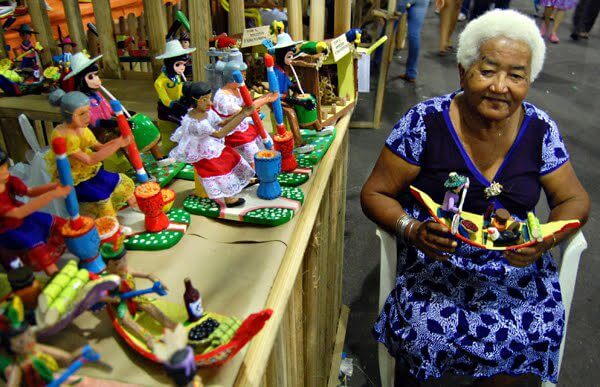
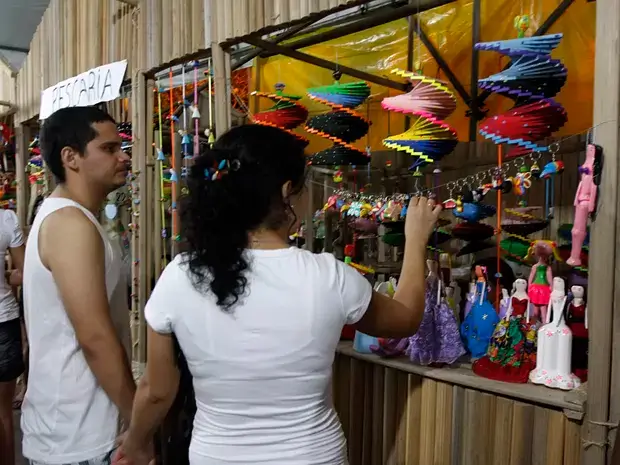
MiritiFest
The Miriti Festival (better known as MiritiFestival or simply MiritiFest) is a cultural event in the municipality of Abaetetuba, the "World Capital of Miriti Toys". Held annually in April or May in celebration of miriti, the so-called "tree of life". In 2009 it became Cultural Heritage of the State of Pará.
The first MiritiFestival emerged in 2004, on the initiative of ACA, Asamab and SEBRAE. In the first edition, around 30,000 visitors attended. In 2008 the date was changed to June; in following years the festival returned to the traditional period. The venue became Praça da Bandeira.
In 2013, Asamab and SEBRAE diverged over the private entity's growing interference. The split was formalized in 2014, when Asamab gained greater autonomy in organizing the festival.
The festival consolidates as a powerhouse of talent and art, and Abaetetuba holds the title of "World Capital of Miriti Toys", with growing visibility and opportunities for the creative economy.